




Support might look like
01
Daily living skills
Practising everyday tasks and routines in a supportive environment, with assistance adapted to the child's individual abilities.
04
Building independence
Breaking everyday activities into achievable steps and supporting children to gradually take a more active role.
02
Community participation
Providing disability support so children can access activities, recreation, outings and community environments that may otherwise be difficult to participate in.
05
Choice & decision-making
Creating meaningful opportunities for children to express preferences, make choices and have a voice in the things that affect them.
03
Social participation
Supporting children to take part in shared activities, hobbies and community experiences while respecting their individual communication and social needs.
06
Individualised disability support
Understanding that two children of the same age or with the same diagnosis may have completely different abilities, personalities and support needs.

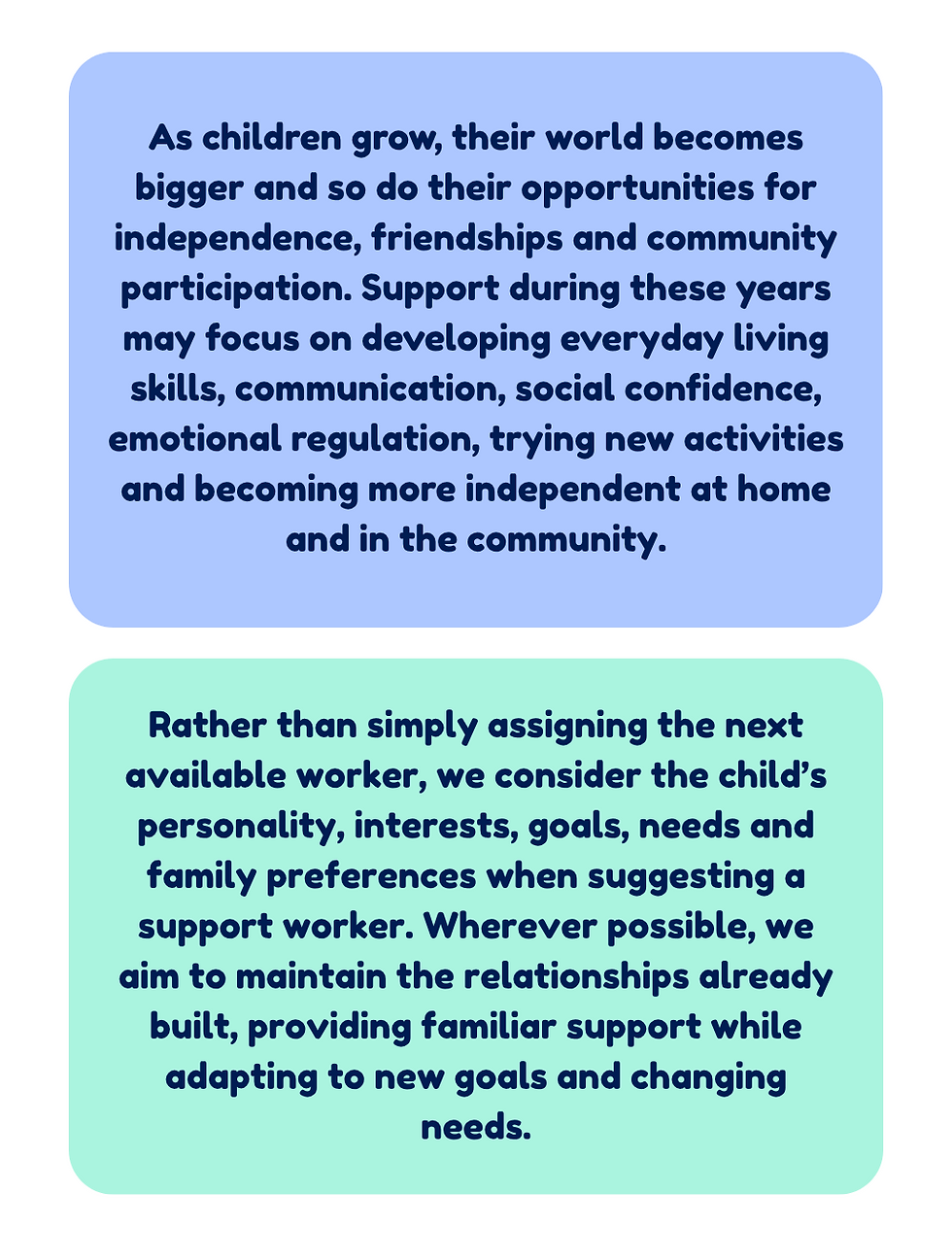
Moving from early childhood into childhood shouldn't automatically mean introducing an entirely new support worker.
If a child has developed a safe and positive relationship with someone who understands their disability, communication, routines and personality, we recognise the value of maintaining that connection.
The goals can evolve without the relationship having to disappear.
Getting Started
Enquire Today
Our team provides specialised NDIS therapy and support services both in-home and in community. Reach out to discuss your specific needs or to learn more about our coverage areas.

